How to Choose a Segment Streetlight Controller for Street Lighting
What is a segment streetlight controller and how it works
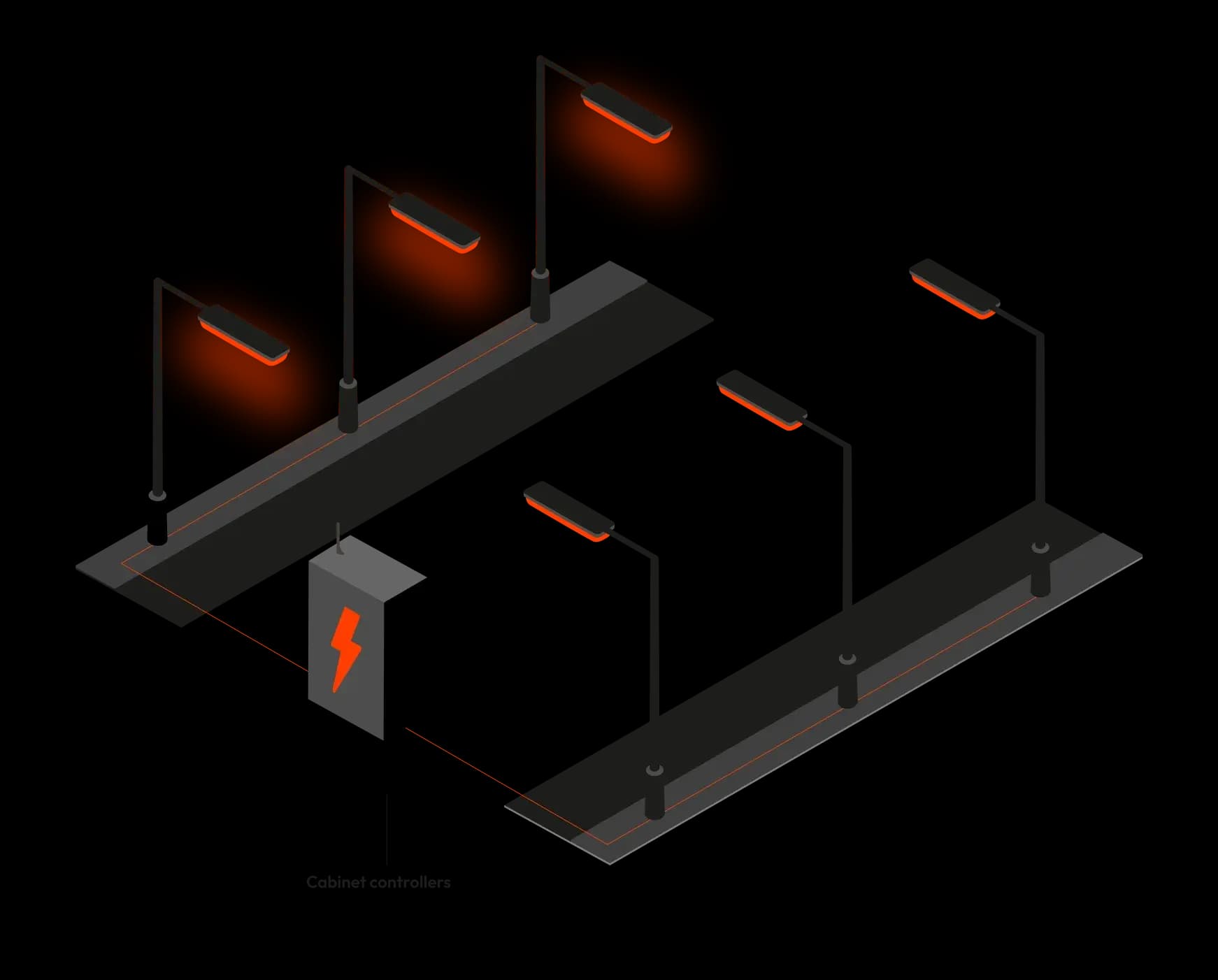
Segment streetlight controllers are cabinet-level devices used to control, monitor, and protect entire street lighting power segments rather than individual luminaires. They manage not only lighting schedules, but also the electrical infrastructure behind them — including feeders, protection devices, meters, and sensors.
In this article, we explain:
- what a segment streetlight controller is and how it works,
- why municipalities still rely on segment-based control,
- how to choose the right controller depending on cabinet type and power configuration,
- when segment controllers are used in street lighting,
- how segment controllers integrate with modern lighting software platforms.
Cabinet-level control of street lighting power segments
For more than a decade, individual controllers have been presented as the future of outdoor lighting. In practice, municipalities and utilities continue to rely on group segment controllers. The reason is simple: they control not only the luminaires, but the entire energy chain.
A group controller is installed in the cabinet and manages the full electrical segment: incoming power, contactors, protection devices, monitoring points, and sensors.
This allows operators to:
- Switch and protect feeder lines.
- Detect voltage presence across critical nodes.
- Integrate with meters and third-party equipment via RS-485 or CAN.
- Collect diagnostics and alarms for the whole feeder, not just a single luminaire.

Why segment streetlight controllers are widely used
- Reliability: one central device in the cabinet is easier to protect, maintain, and replace than hundreds of nodes on poles.
- Clear diagnostics: dispatchers see the state of an entire segment and can localize faults quickly.
- Cost efficiency: one controller per cabinet reduces CAPEX compared to mass deployment of individual units.
- Scalability: expansion modules (MultiConnect, HighVoltRelay, PowerTrack) extend monitoring and control without redesigning the network. Moreover, segment controllers can serve as a solid base for future upgrades to individual control — for example, PLC or Radio nodes can be layered on top without replacing the cabinet infrastructure.
Individual vs Segment Streetlight Controllers
| Criteria | Segment Controllers | Individual Controllers |
| Control Level | Per group (segment) | Per luminaire |
| Installation Point | In feeder cabinet | On each light fixture |
| Dimming Capability | Group-level or limited | Individual dimming |
| Fault Detection | Limited, segment-level | Real-time, precise (per lamp) |
| Data Granularity | Aggregated per segment | Detailed per lamp |
| Deployment Cost & Speed | Lower cost, faster deployment | Higher cost, slower rollout |
| Smart City Integration | Limited | High (supports IoT, continuous power) |

How to choose the right segment streetlight controller
Choosing the right segment streetlight controller depends on cabinet type, power configuration, and integration requirements.
Segment Streetlight Controllers by DITRA Solutions
DITRA Solutions provides solutions for:
- DITRA CORE PRO – the standard for three-phase cabinets without Ethernet or GPS.
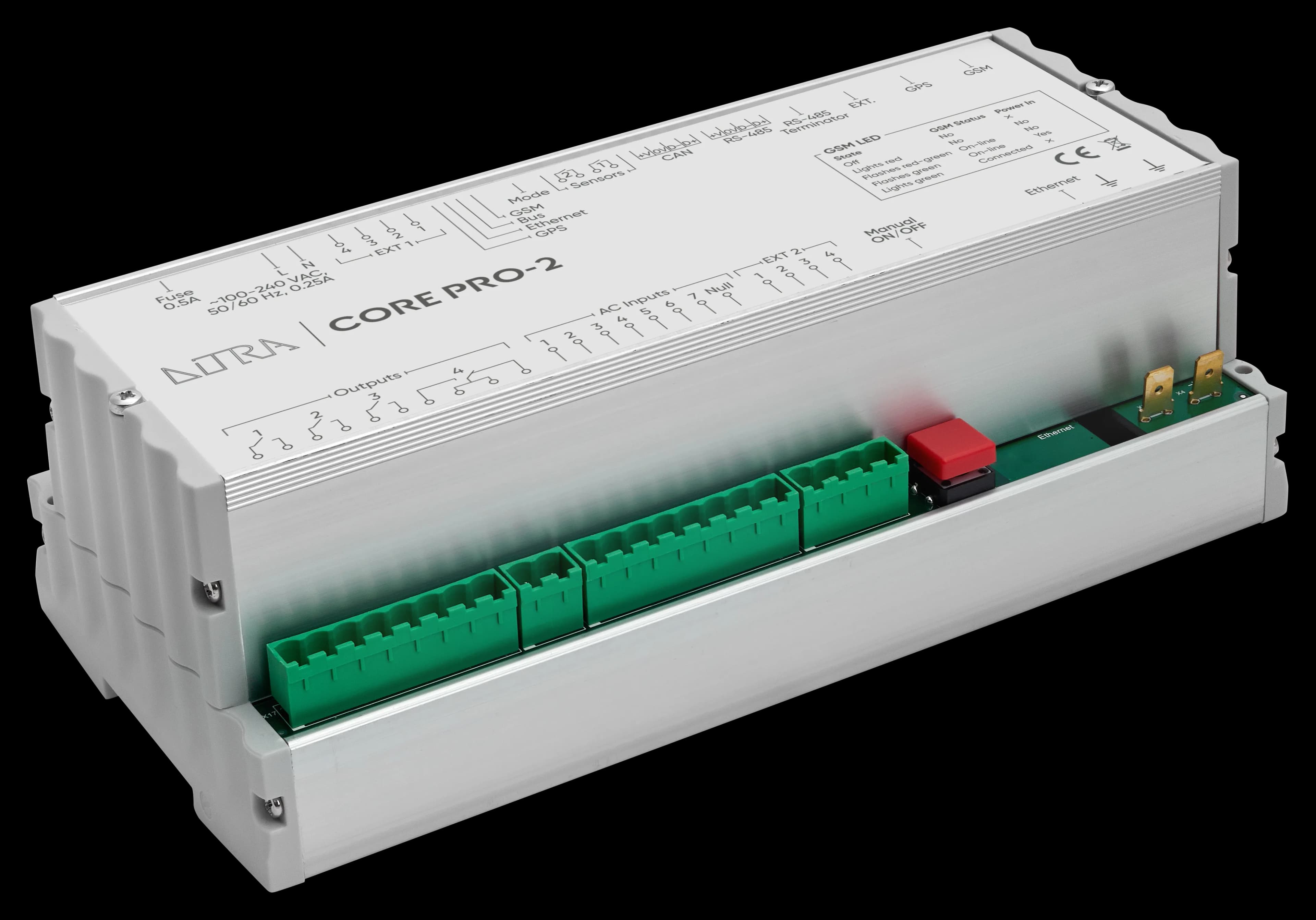
- DITRA CORE PRO-2 – for cabinets with Ethernet connectivity or where GPS/GLONASS synchronization is required.
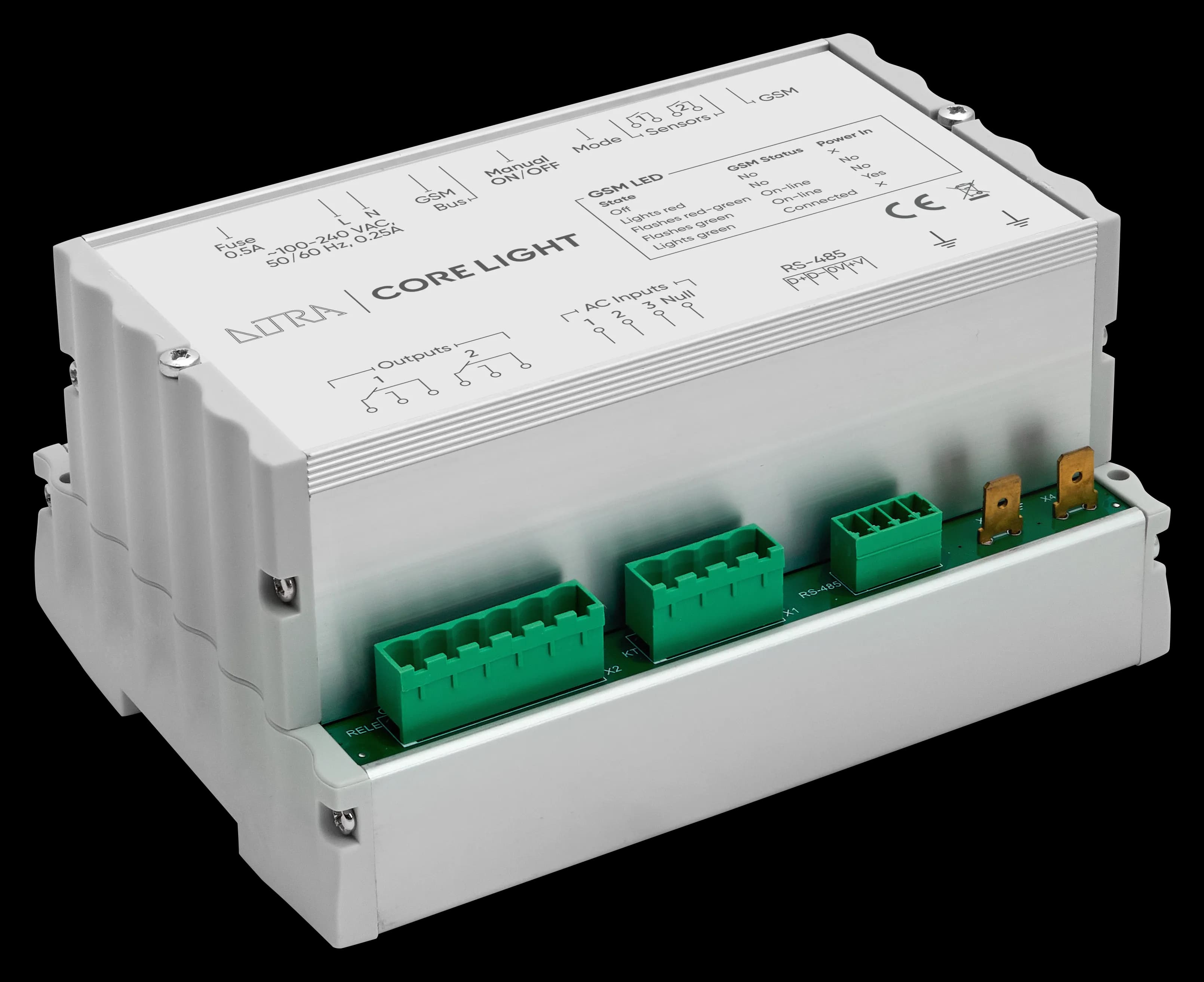
- DITRA CORE LIGHT – a simplified version of CORE PRO with reduced number of relay outputs and control points.
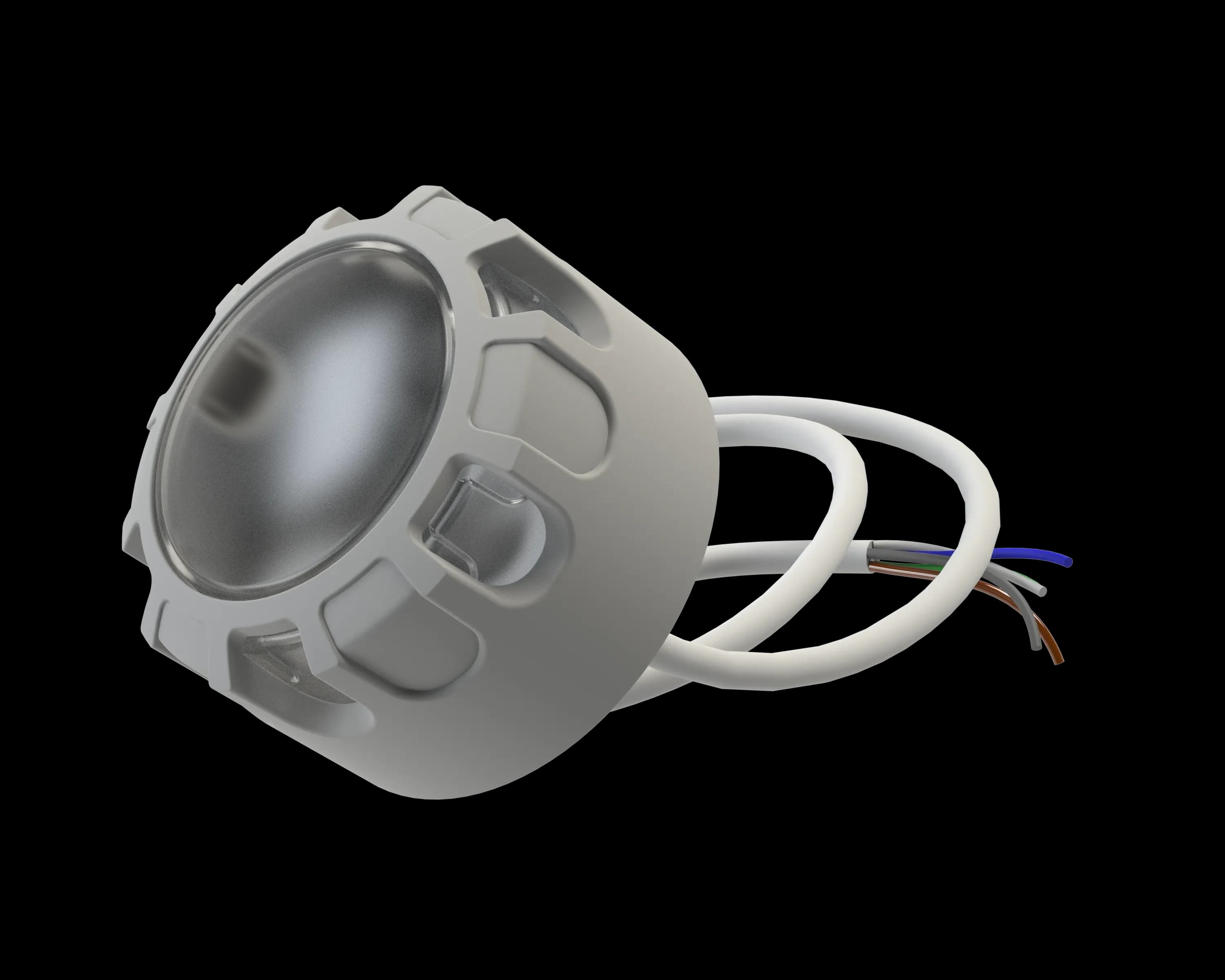
- DITRA CORE MINI – an ultra-compact option for managing one outgoing line.
The differences are minimal at the functional core, but they allow precise adaptation to project conditions — from large substations to small feeder cabinets.
Software ecosystem and integration options
Municipalities can decide how deep they want to engage with the software infrastructure. At the entry level, DITRA CMS provides daily dispatching, scheduling, and cabinet monitoring. For advanced needs, DITRA Synergy adds powerful analytics, reporting, and city-wide monitoring. And through open API, all collected data can be integrated into external platforms if required.
The role of segment controllers in modern energy infrastructure
Segment controllers remain the backbone of modern electrical infrastructure. They provide not just lighting schedules, but visibility and control over the power chain that feeds entire districts. Even when cities adopt individual nodes for advanced features, the group controller stays as the anchor point of reliability, monitoring, and data flow.
That is why, in 2025, group segment control is not a legacy choice — it is still the most rational foundation for street and city lighting systems.
How to choose a segment streetlight controller based on cabinet conditions
| Cabinet condition / requirement | Best fit controller | Why | Typical cabinet / project fit |
| Three-phase cabinet, no Ethernet, no need for GNSS sync | DITRA CORE PRO | Baseline “standard” option for typical 3-phase cabinets | Standard feeder cabinets where you need segment switching, protection, monitoring |
| Ethernet connectivity is available or GPS/GLONASS synchronization is required | DITRA CORE PRO-2 | Designed for cabinets with Ethernet and/or where GNSS sync is a requirement | Cabinets tied into an IP network; projects needing time/location sync for operations |
| You need the CORE PRO approach but with fewer relay outputs/control points | DITRA CORE LIGHT | Simplified CORE PRO variant with reduced I/O | Cabinets where you don’t need many controlled circuits/monitoring points |
| You only need to manage one outgoing line and space is tight | DITRA CORE MINI | Ultra-compact option for one outgoing line | Small feeder cabinets / minimal segments |