How to Choose a NEMA Street Light Controller: PLC vs RF vs GSM
Communication technologies used in NEMA Street Light Controllers
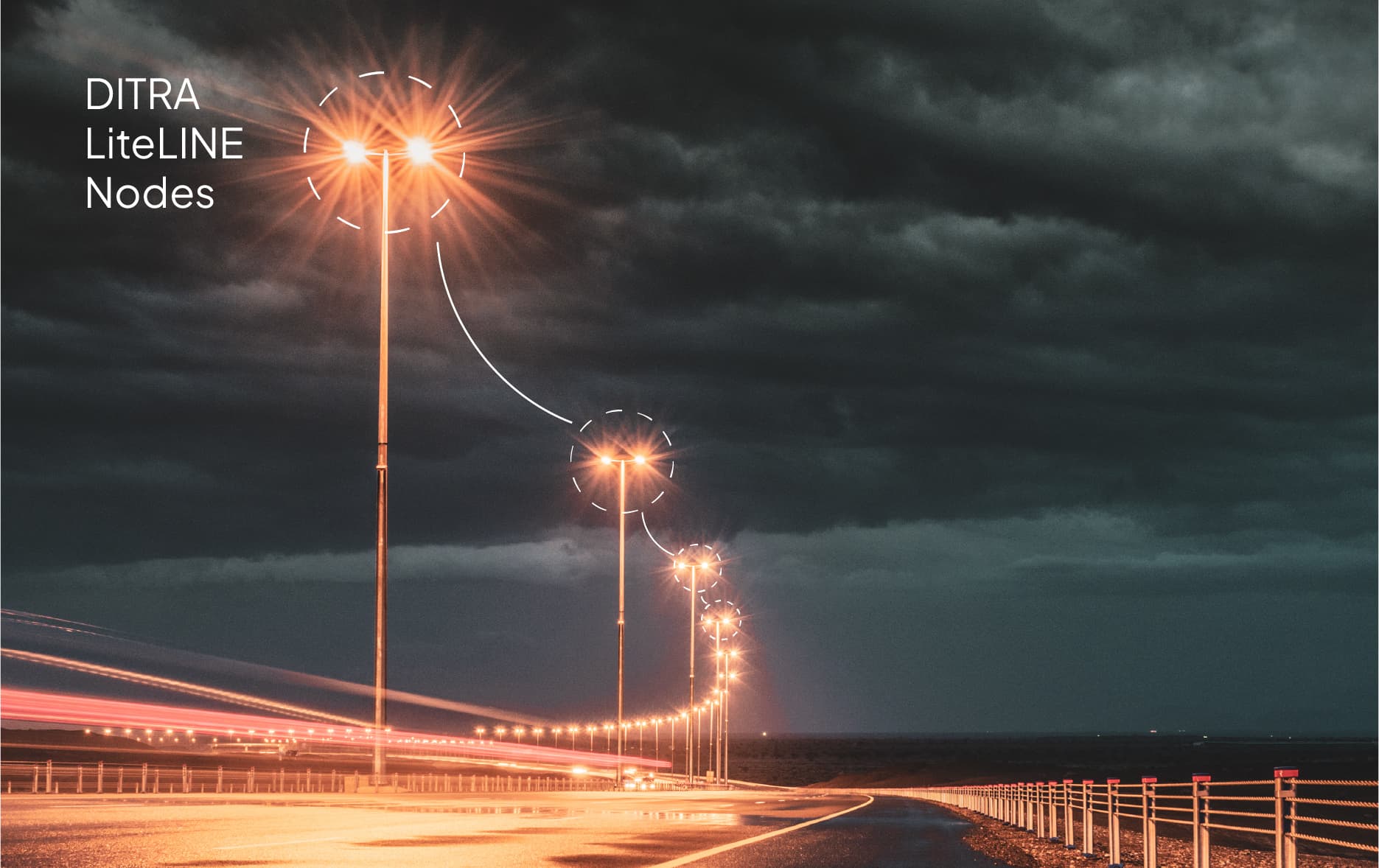
NEMA street light controllers are standardized, luminaire-mounted devices used to control and monitor street lighting systems. While the form factor is unified, the key difference between NEMA controllers lies in how they communicate.
Depending on the available infrastructure, NEMA controllers can operate using three main communication technologies: PLC (power line communication), radio (RF), or cellular networks such as GSM.
In practice, the choice of communication method defines how reliable, scalable, and cost-efficient the lighting system will be.
In this article, we focus specifically on communication technologies used in NEMA controllers:
- operating principles of PLC, RF, and GSM communication,
- infrastructure conditions where each technology performs best,
- selection criteria based on reliability, scalability, and cost.
Communication technologies for NEMA street light controllers
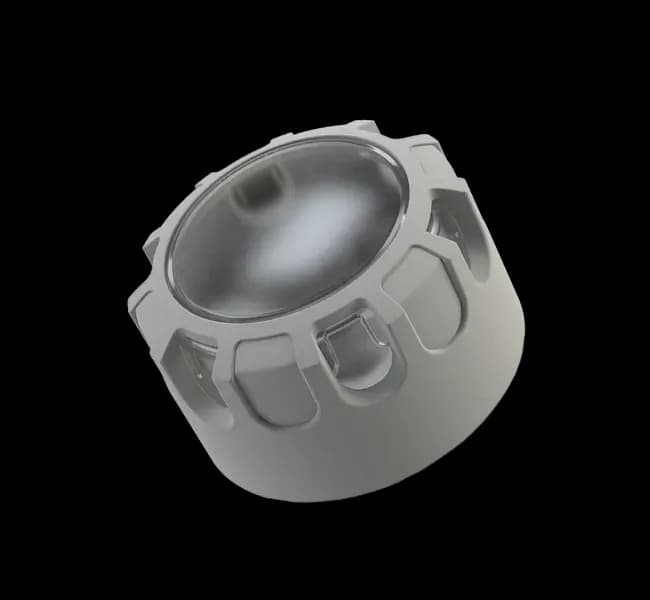
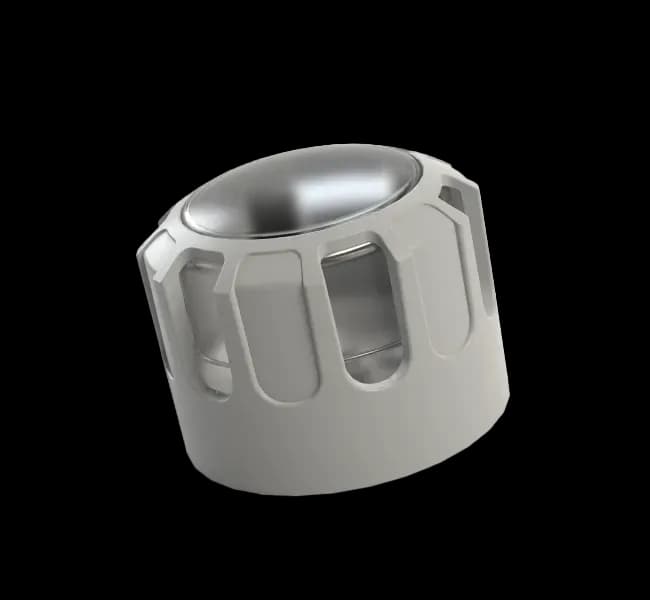
If your luminaire is equipped with a NEMA socket, you don’t need to worry about being limited to just one control method. A NEMA controller can be adapted to your project needs. DITRA Solutions offers three different types of NEMA luminaire controllers — PLC, Radio, GSM — all in the same standard form factor.
Nema LiteLine Node (PLC)
The best solution for projects with an existing power grid. Data is transmitted through the same cable as the power supply — no extra wiring required.
Ideal for:
— new or dedicated lighting lines designed only for streetlights
— projects where minimizing infrastructure costs is important
— areas where cabling is already in place and reliable
Key features: stable work in areas where wireless control is limited or restricted, lower cost compared to other individual control solutions.
Previously, in our article PLC in Street Lighting, we explained when PLC is the best choice and highlighted the key differences between PLC and Radio control.
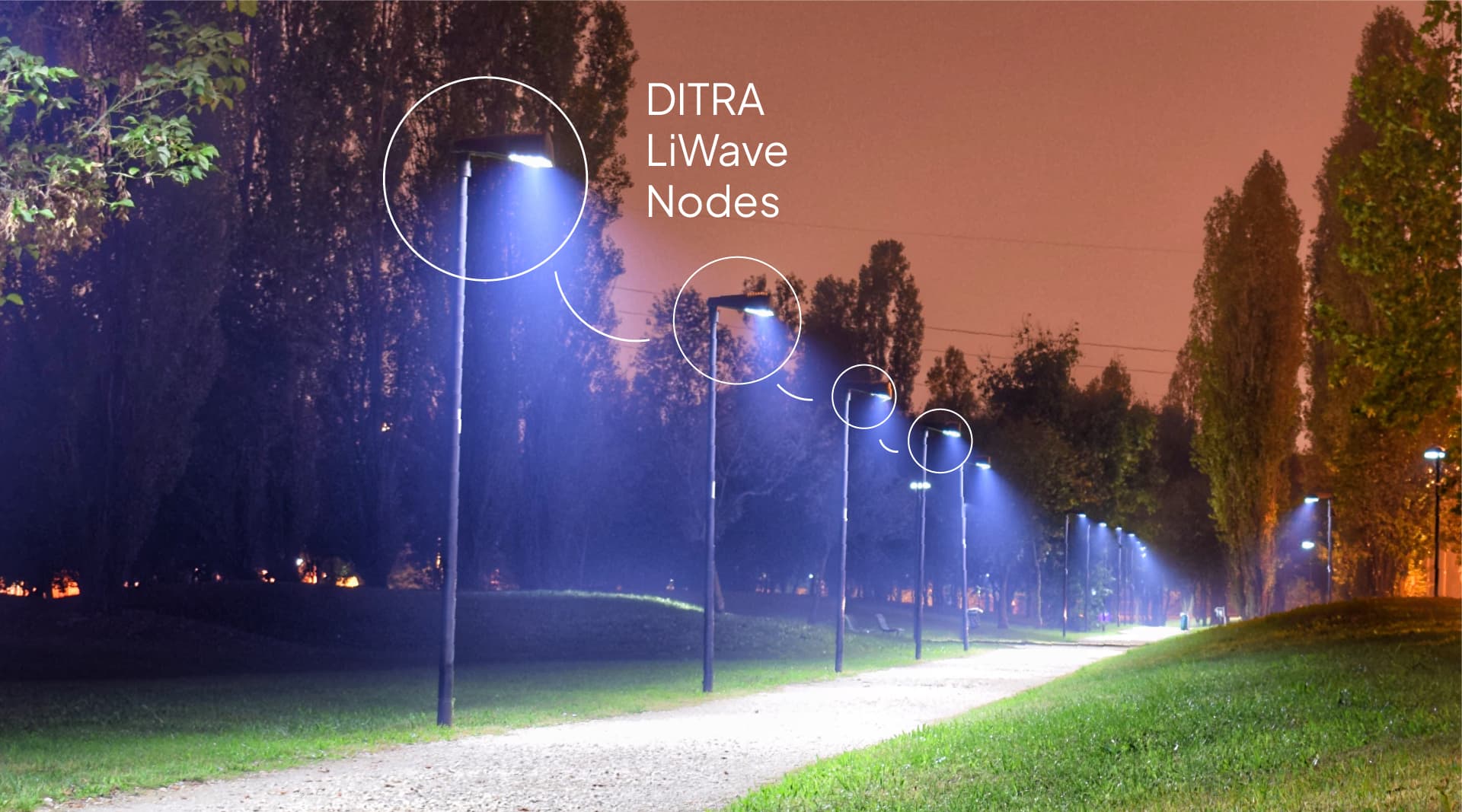
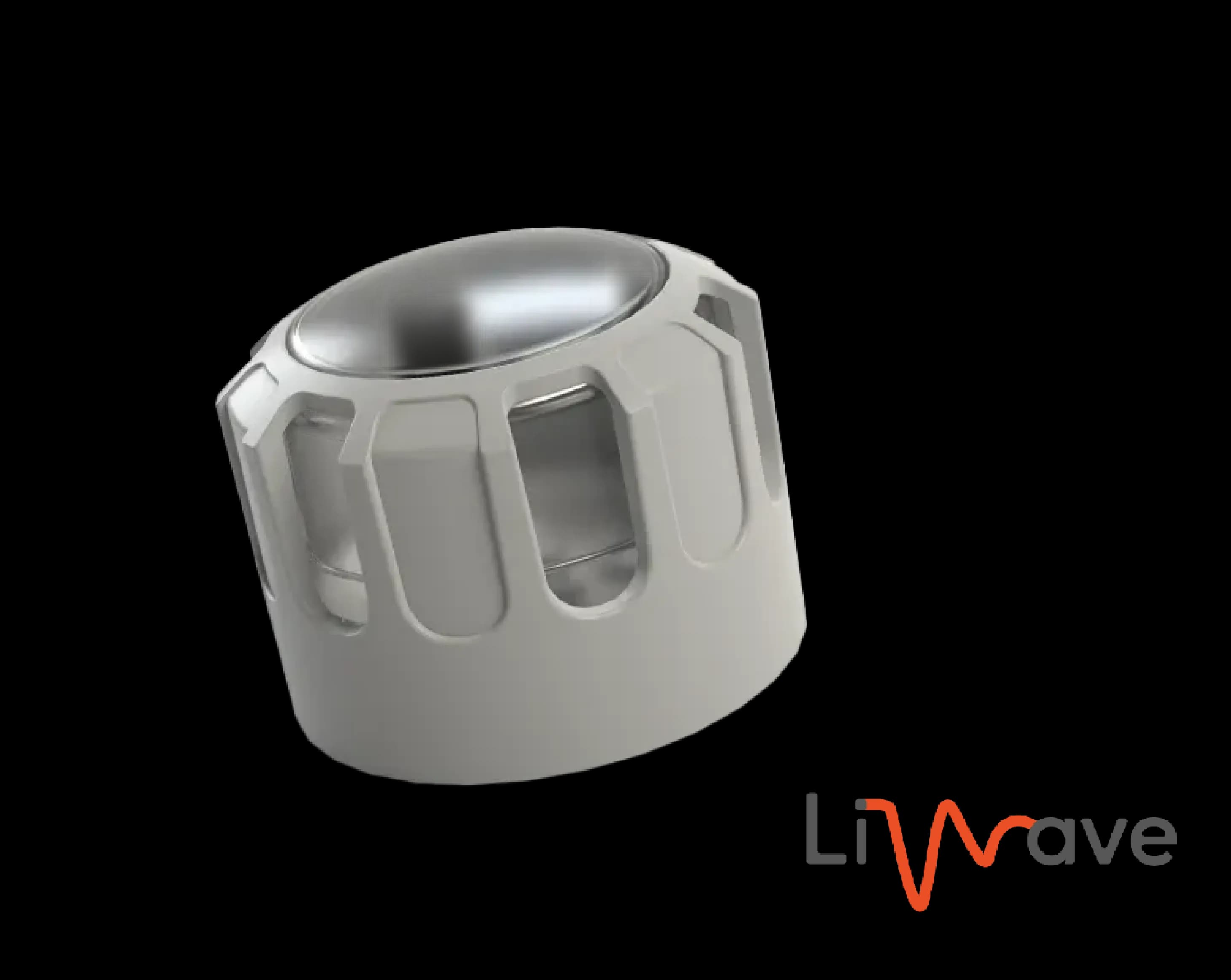
Nema LiWave Node (Radio)
Radio-based control with DITRA’s LiWAVE technology. Works on license-free frequencies (868/915 MHz), no SIM cards or cables required.
Ideal for:
— open areas with low building density, ensuring stable radio signal without interference
— sites with cabling restrictions or where cable installation is costly
— pedestrian zones, historical centers, and parks, where seamless integration with motion sensors enhances efficiency and comfort
Key features: motion sensor integration for adaptive control: sensors can be connected to each pole individually or shared across a group of luminaires, enabling multiple lights to switch on/off based on signals from a single sensor — reducing costs and increasing efficiency.
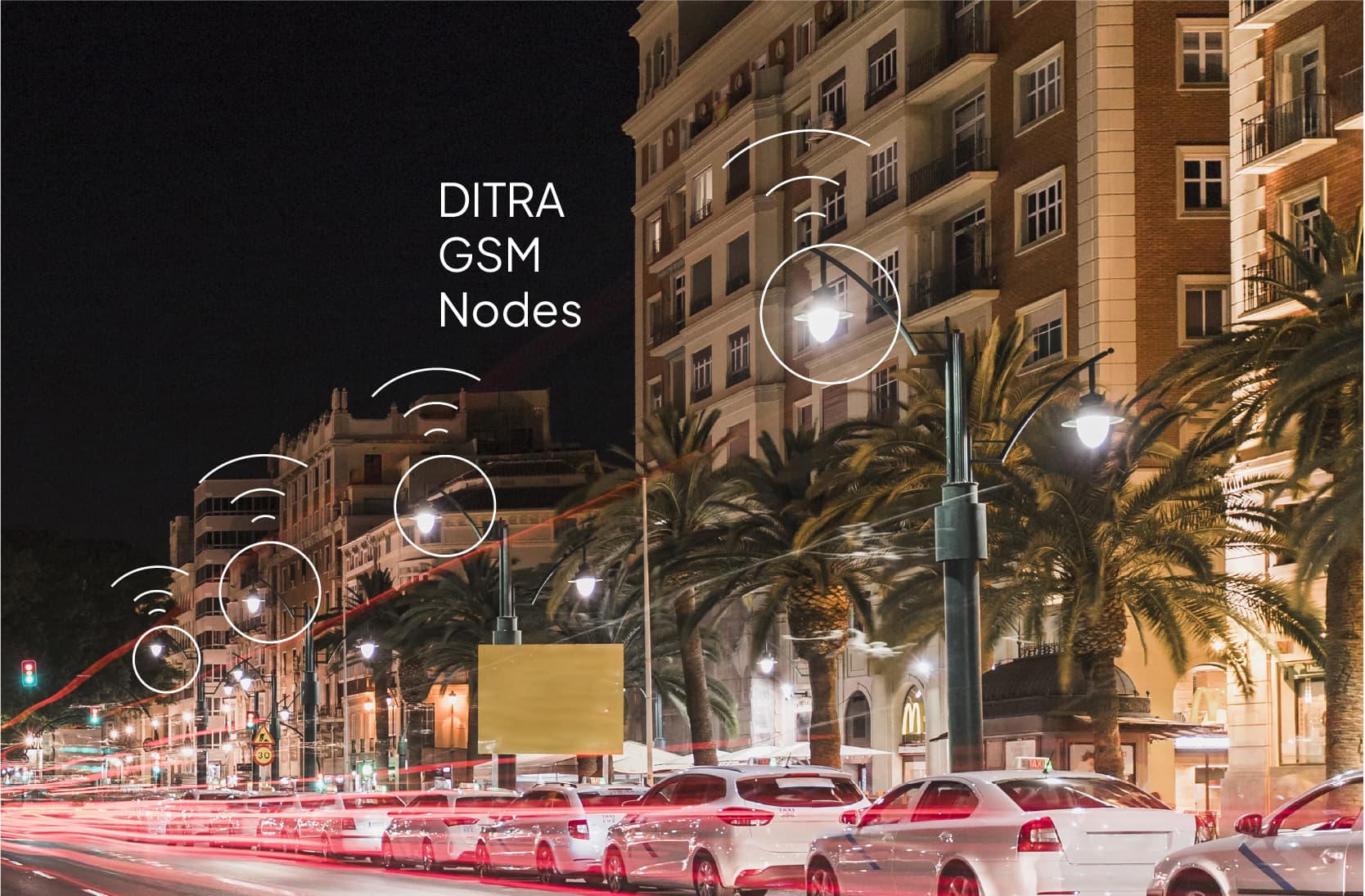
Nema Streetlight Controller (GSM)
Lighting control via mobile network — each luminaire connects with an IoT SIM card. Full autonomy, even in the most remote locations.
Ideal for:
— single lighting points (crosswalks, parking lots, highways)
— areas powered from decentralized sources
— areas with a high density of high-rise buildings, such as the central zones of large cities
Key features: dedicated and secure communication channel directly between the lighting nodes and the software platform, advanced 2G/4G/NB-IoT connectivity
All NEMA Nodes feature quick plug-and-play installation into the NEMA socket, motion sensor input, IP66 dust and water protection, and seamless configuration and monitoring via DITRA software - the choice of technology depends only on your project.
Whether your project needs a NEMA street light controller for highways and urban roads, a flexible NEMA controller for Smart City integration, or a reliable NEMA luminaire controller for individual fixtures — DITRA Solutions provides the right solution.
PLC vs Radio vs GSM NEMA Nodes: Infrastructure-based selection table
| Infrastructure / site scenario | Recommended NEMA node type | Why it fits (based on the article) | Typical use cases | Key dependency / constraint |
| A reliable power grid is already in place and you want to avoid extra infrastructure | Nema LiteLine Node (PLC) | Data runs over the same cable as the power supply, so no additional wiring is needed | New or dedicated lighting lines; projects where minimizing infrastructure cost matters; areas where cabling is already installed and reliable | Power-line quality and stability (it is the data medium) |
| Cabling is restricted or expensive; the area is open with low building density | Nema LiWave Node (Radio) | License-free radio operation, no SIM cards and no new cables | Open areas with low building density; sites where cable installation is costly or limited | Local radio conditions (signal/interference) |
| You want adaptive control with motion sensors in public spaces | Nema LiWave Node (Radio) | Motion sensors can be connected per pole or shared across a luminaire group to trigger multiple lights | Pedestrian zones, historical centers, parks | Sensor deployment model (per-pole vs shared) |
| You have remote or distributed lighting points and need each luminaire to be autonomous | Nema Streetlight Controller (GSM) | Each luminaire connects via an IoT SIM card over the mobile network | Single lighting points (crosswalks, parking lots, highways); areas powered from decentralized sources | Mobile network availability and SIM approach |
| High-rise, dense urban areas (central zones of large cities) | Nema Streetlight Controller (GSM) | Mobile-network-based connectivity is a good fit for this environment | Central zones with a high density of high-rise buildings | Reliance on cellular coverage (2G/4G/NB-IoT as stated) |