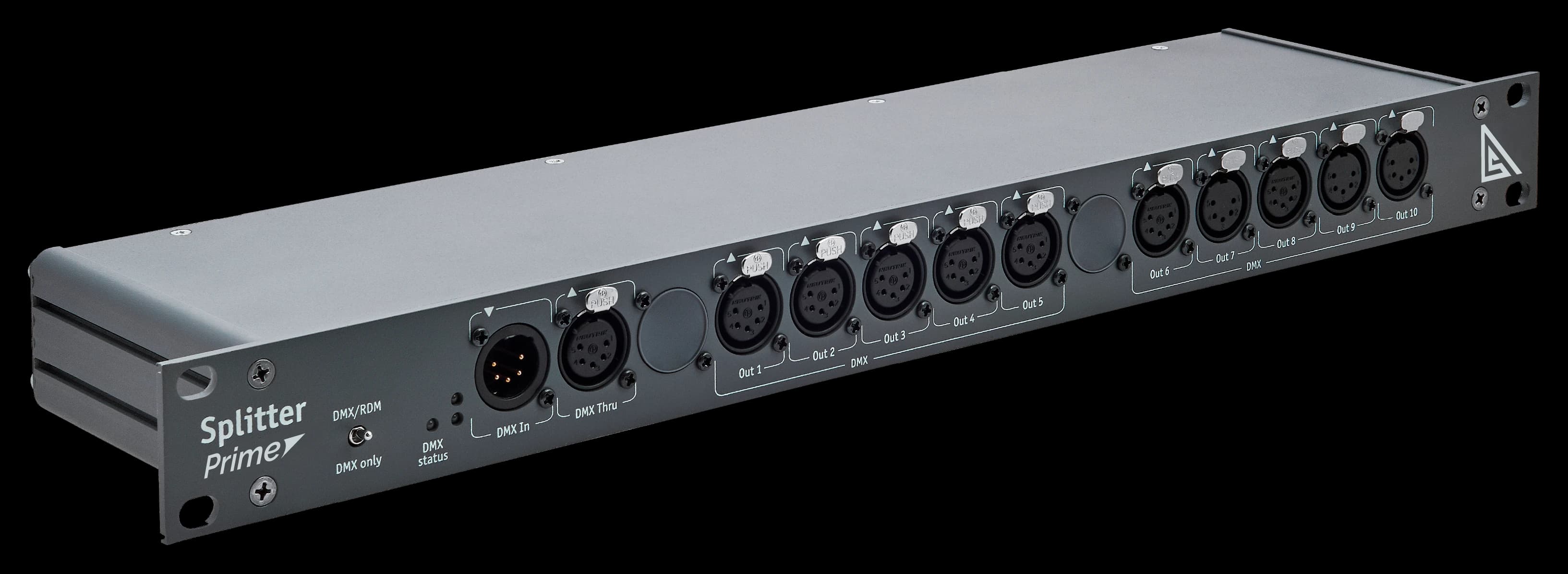
Thru DMX: How the pass-through function works and why it’s critical for pro DMX setups
Why DMX signal continuity is critical in professional setups

Thru DMX is a hardware-level pass-through function that allows a DMX signal to continue along the line even if a device fails or loses power. It is used in professional DMX installations to ensure uninterrupted signal transmission in stage, architectural, and media façade lighting systems.
In linear DMX networks, a single failed or unpowered device can interrupt the signal for all downstream fixtures. This creates a single point of failure that can stop an entire show or lighting scene. Thru DMX eliminates this risk by providing a direct signal bypass that works independently of device electronics.
In this article, you will learn:
- what Thru DMX is and how the pass-through function works,
- why DMX signal continuity is critical in professional installations,
- where Thru DMX is used in real-world lighting projects,
- how Thru DMX is implemented in DMX splitters and distribution equipment.
What is Thru DMX in simple terms?
The Thru DMX function (from “through,” often abbreviated as Thru) allows the DMX signal to be passed directly onward without processing or amplification, bypassing the splitter’s electronics. In other words, the signal goes through the device as if it weren’t in the chain at all.
Think of it like a water pipe: a regular splitter is like a valve that takes water (signal), filters it, amplifies the flow, and distributes it to multiple pipes. Thru DMX is just a straight piece of pipe connecting the input to the output directly. Even if the “valve” fails, water will still flow through the pipe.

Why is this important?
In a standard linear DMX network, devices are connected in series. This is convenient but vulnerable: if one device in the chain shuts down, burns out, or loses power, everything after it will lose the signal.
Thru DMX solves this by working like a bypass: if a device with Thru DMX fails, the signal will still continue along the DMX line.
This provides:
- Increased overall system reliability
- Resistance to single-device failures
- Safety during “hot” equipment connection or replacement
- Flexibility in building and expanding the network
Where is Thru DMX used?
- On stage and in theatres — when the show cannot stop even for a second
- In architectural lighting — especially in installations with limited access
- At temporary festival venues — where the configuration changes often
- In film and TV studios — where DMX controls not just lighting but also sets, screens, and effects
How is Thru DMX implemented in splitters?
Thru DMX is implemented at the hardware level — without involving device logic, controllers, or firmware — which makes it especially reliable.
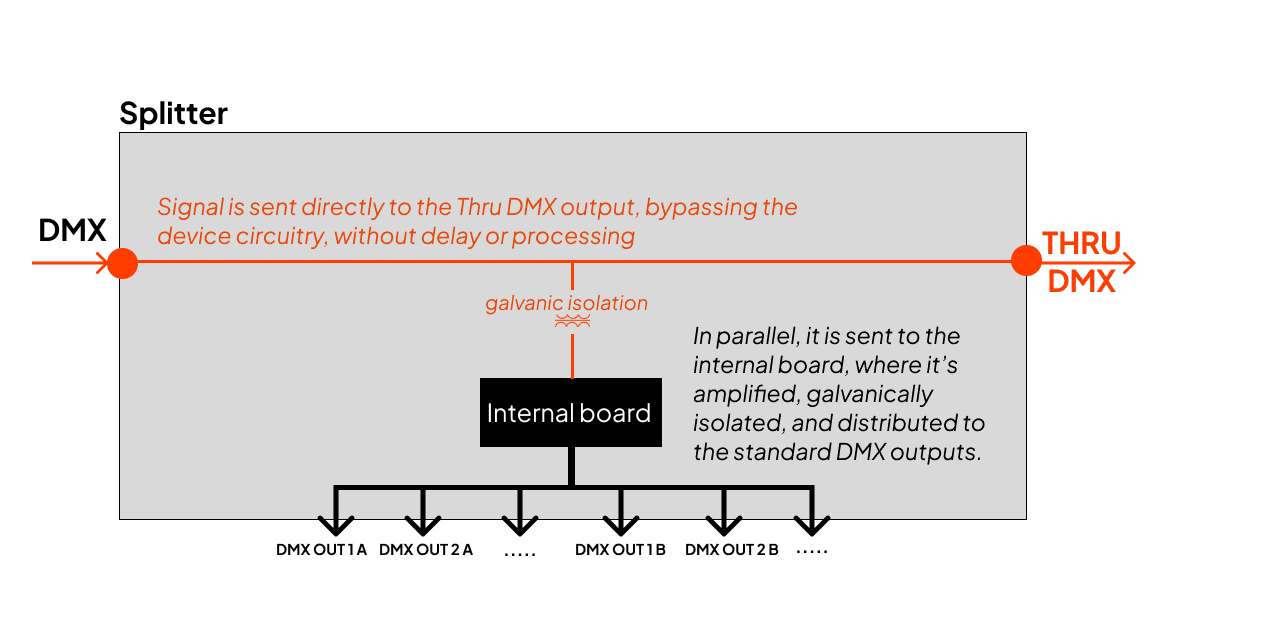
In DITRA Solutions splitters, as in most professional models, the DMX input is always a single port. From this port:
- The signal is sent directly to the Thru DMX output, bypassing the device circuitry, without delay or processing.
- In parallel, it is sent to the internal board, where it’s amplified, galvanically isolated, and distributed to the standard DMX outputs.
This means the input signal is split into two paths inside the device:
- One “clean” and direct — via Thru DMX.
- The other — amplified and split — to the other outputs.
Thru DMX is not an additional input or an independent line. It’s always linked to the device’s single input, making it ideal for continuing the main signal chain — for example, feeding DMX to the next splitter or a distant part of the installation.
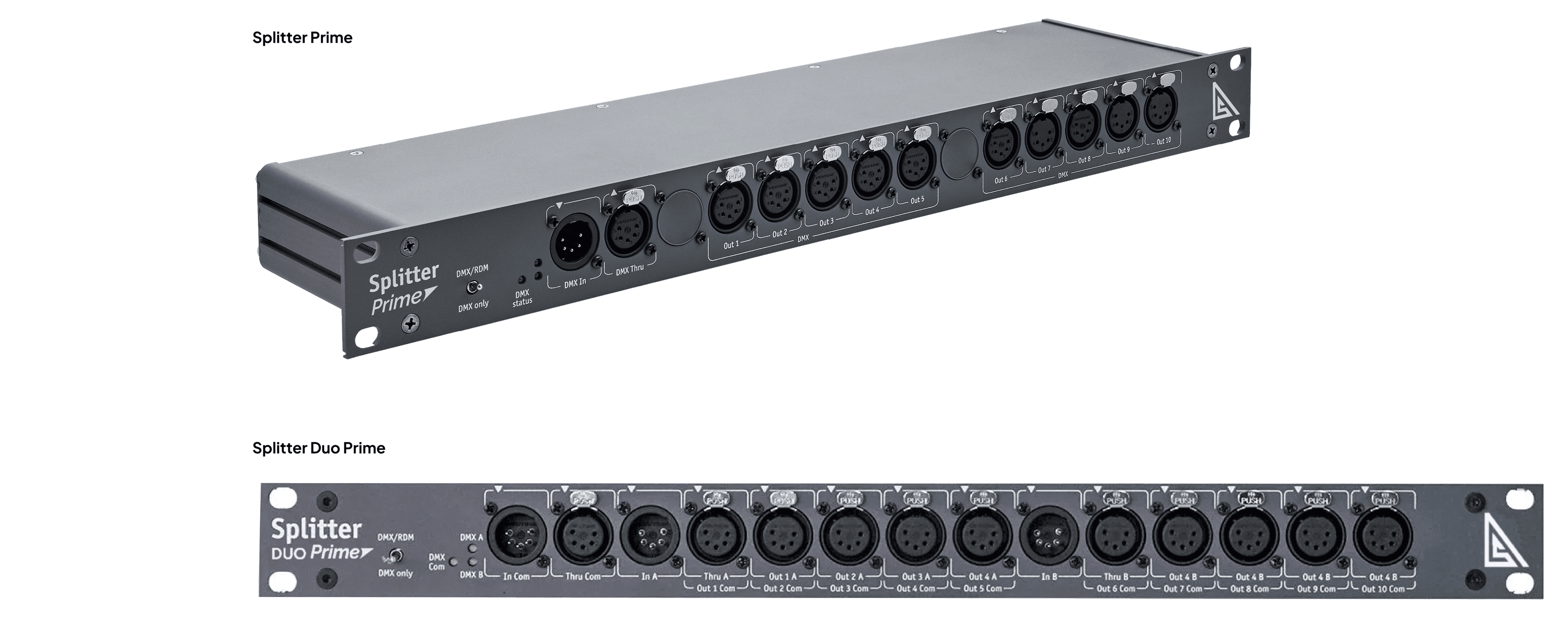
Which DITRA Solutions devices support Thru DMX?
Both are equipped with a dedicated Thru DMX output, ensuring uninterrupted pass-through signal transmission even if the device fails or loses power. This makes them a reliable choice for critical installations where failure is not an option.
Real-world example
You’re installing building façade lighting. The cable runs from the controller to the first floor, then to the second, then to the third. On the second floor, there’s a splitter. If it fails, everything above the second floor will go dark — the signal won’t reach them. But with a splitter that has Thru DMX, the cable will “bypass” the failed device, and the third floor will keep working.
Thru DMX is simple in concept but extremely valuable in real-world operation. It’s like an emergency exit — you may not use it every day, but when you need it, it can save the entire project.
DITRA Solutions splitters with Thru DMX are the right choice if you work in a field where reliability and stability are paramount.